In reality, there’s a difference between “Affordable Housing,” “workforce housing,” and “affordable housing.”
“Affordable Housing” consists of rental units targeting households earning 60% of Area Median Income (AMI) or less and is typically financed with scarce government resources.
“workforce housing” consists of renters and owners earning between 60% and 120% of AMI and is typically financed with a mix of government and private financing.
“affordable housing” refers to housing that costs renters and owners 30% or less of their income. That said, “Affordable Housing” can be unaffordable. Same goes for “workforce housing.”
That said, there’s a clear distinction between “Affordable Housing” and “workforce housing” – the 60% of AMI line.
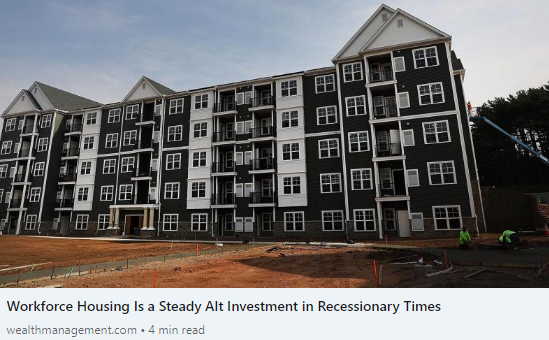
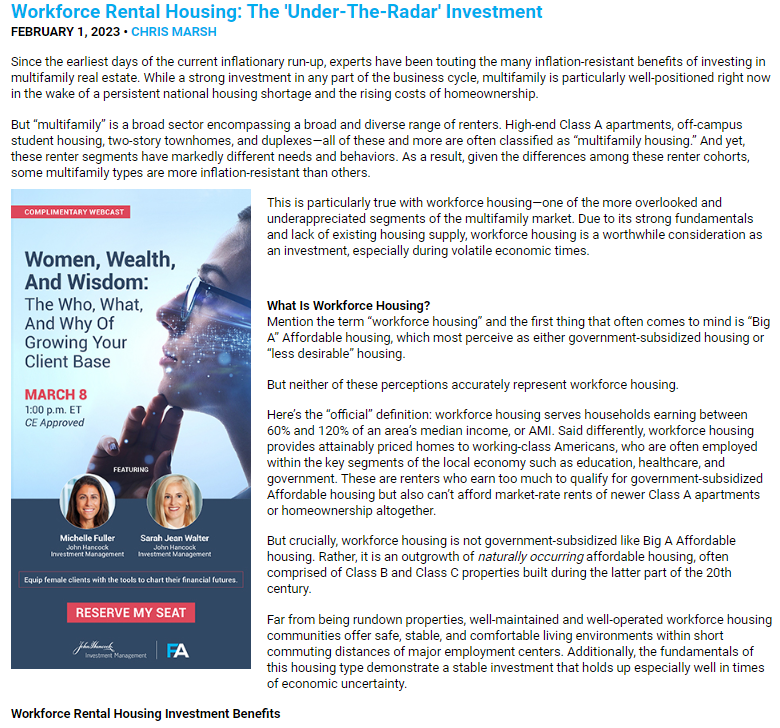
“Indeed, certain types of investment real estate—especially multifamily housing—tend to perform better during downturns. And within the category of multifamily housing, workforce housing is fast becoming a wise investment choice for high-net-worth investors during volatile economic periods.”
Cities themselves are one of the biggest employers of people seeking workforce housing. Although they have all of the necessary tools (Planning & Zoning, Economic Development, Community Development, Housing Authority) they typically lack the technical expertise to address their growing workforce housing problems. Indeed, I have seen cities where as many as 70% of their employees are forced to commute to work each day because they cannot afford to live in the very town they serve.
My company offers the technical expertise to help cities address this growing problem.
From the piece:
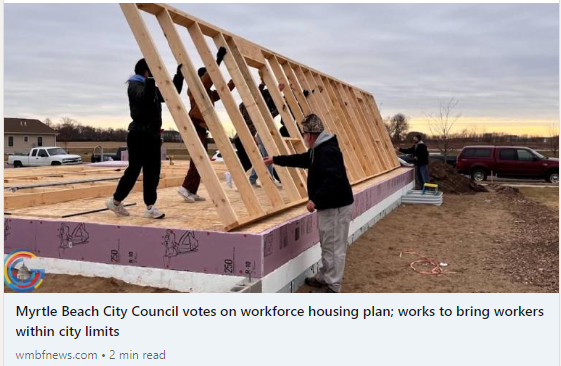
“The Myrtle Beach City Council voted in favor of two resolutions on Tuesday that they hope will help solve the lack of housing options for city employees.”
Just yesterday I had the following discussion with my civil engineer regarding a proposed $35mm workforce housing development to be financed with tax-exempt bonds – a typical day in the life of a developer:
Engineer: “The city wants us to obtain an easement for this 6-square foot piece of private ground to install these offsite stormwater improvements.”
Me: “Ok. But it’s a public improvement, why should I be the one to obtain the easement? That neighbor will likely ignore me. After all, I’m a for-profit developer intending to build apartments near his single family home.”
Engineer: “The city will step in only after you have made an attempt to obtain the easement, but failed.”
Me: “Ok. What will it cost and how much time will it take? Will it hold up my permits? I cannot close on my bond financing without them.”
Engineer: “The easement will probably cost about $2,000. Really not much at all. The city will issue your permits prior to obtaining the easement, but won’t let you begin construction until the easement is obtained. It’ll probably take 6 months to obtain the easement.”
Me: “What you described isn’t a $2,000 problem, it’s a $1,052,000 problem.”
Engineer: “How’s that?”
Me: “At closing, $35 million will get funded into a Trustee account earning 6% (or more) annual interest. Our construction start will get pushed back 6 months which will cost us $1,050,000 in interest, plus the $2,000 to acquire the easement. Does the city not understand the time value of money?”
Engineer: “Wow. I had no idea.”
From the piece:
“First and foremost, local officials should take a hard look at their internal regulatory and permitting requirements. In real-estate development, time is money. Regulatory and permitting processes often unnecessarily add to this burden.”
Don’t confuse PRICING and INCOME TARGETING when discussing affordability. Rents for folks earning 80% of Area Median Income (AMI) can be set affordably while rents for folks earning 50% of AMI can be set unaffordably.
What is found in this piece is actually an appeal to change income targeting, not an appeal to make this project more affordable.
From the piece:
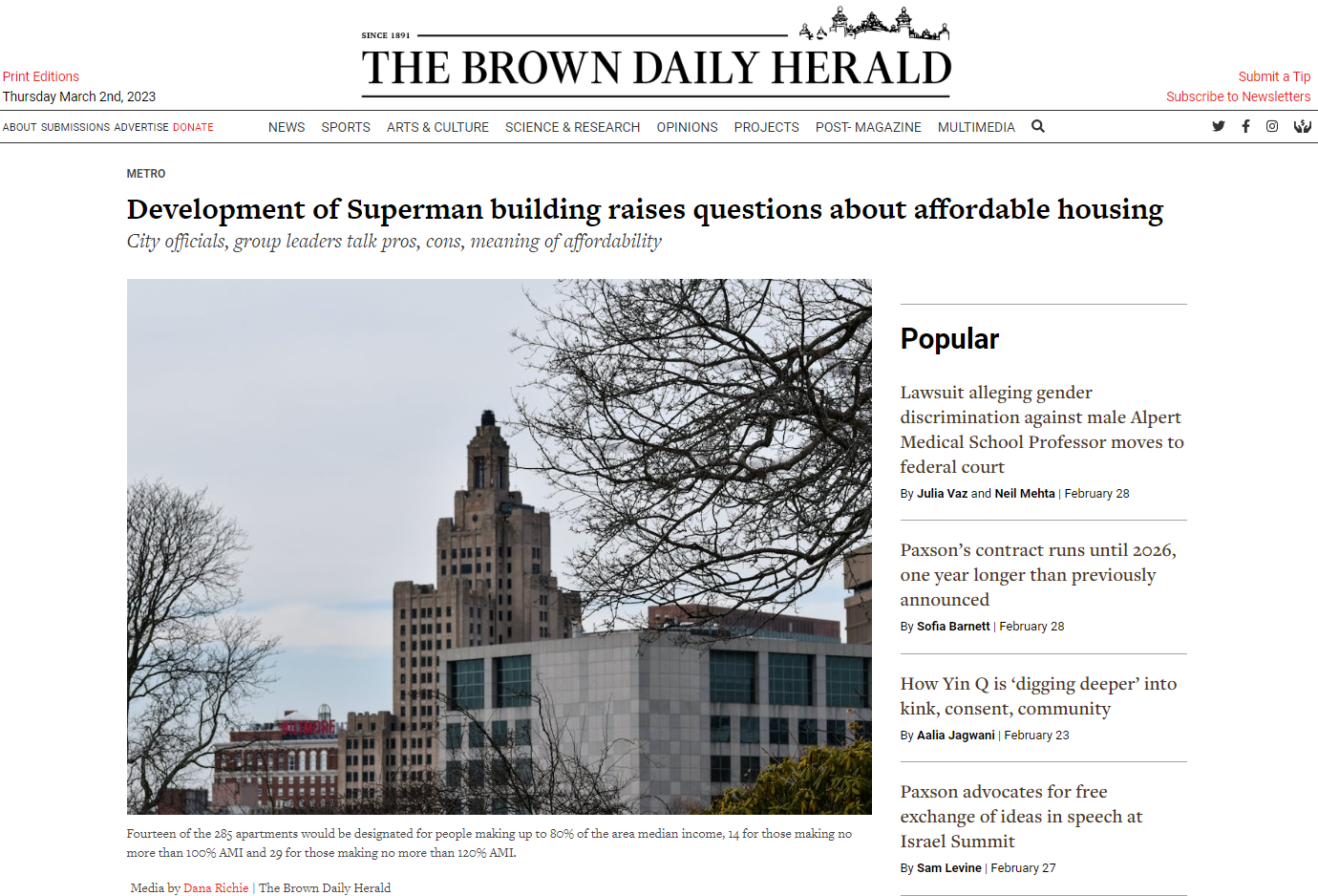
“Though these units have been designated as affordable, ‘only even a small number of those are at the 80% (AMI) level, and 80% is the highest end of what you can really call affordable housing,’ said Peter Asen ’04, deputy director of development and governmental affairs for the Providence Housing Authority.”
“Some multifamily types are more inflation-resistant than others. This is particularly true with workforce housing—one of the more overlooked and underappreciated segments of the multifamily market. Due to its strong fundamentals and lack of existing housing supply, workforce housing is a worthwhile consideration as an investment, especially during volatile economic times.”
The city has the tools for fast-track approvals and the issuance of bonds. Private companies like mine can bring the technical expertise to design and manage these developments for cities who choose this approach.
From the piece:
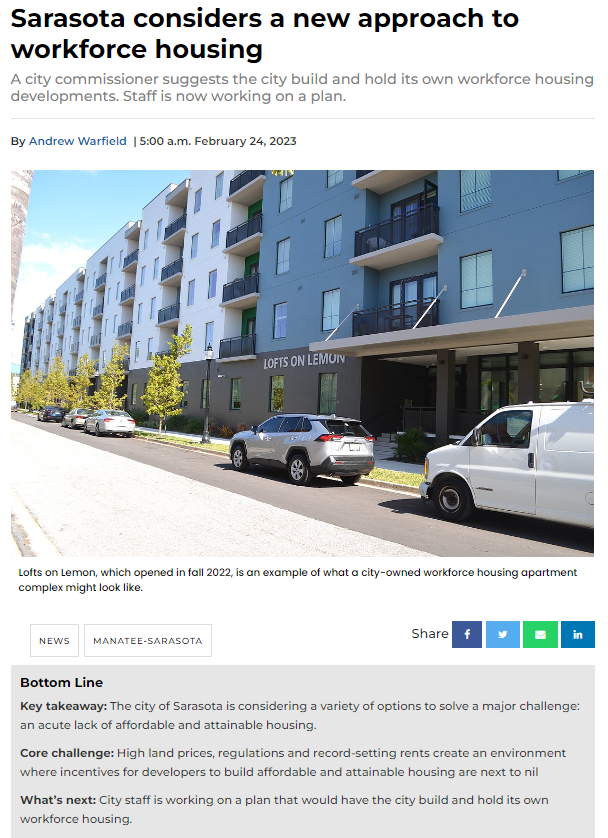
“City staff is working on a plan that would have the city build and hold its own workforce housing.”
There’s the old adage: “You always get less of what you tax.” That’s why an affordable housing tax on developers is such a bad idea.
In reality, the creation of workforce housing should be linked to job creation. It should be treated just like any other public improvement.
For example, a large manufacturer comes to town and the city determines what new infrastructure will be needed to support the new facility. The city issues bonds to extend water, sewer, gas, and electricity and contracts the construction of these new utilities.
While they’re at it, why not evaluate the manufacturer’s housing need and issue bonds for it, too? This, along with fast-tracking the zoning approvals for a sufficient number of workforce housing units, would be a good aporoach.
Cities have all of these tools at their disposal. Proactively using them instead of doing the bidding of the short-sighted NIMBY crowd is the solution to our workforce housing problem.
From the piece:
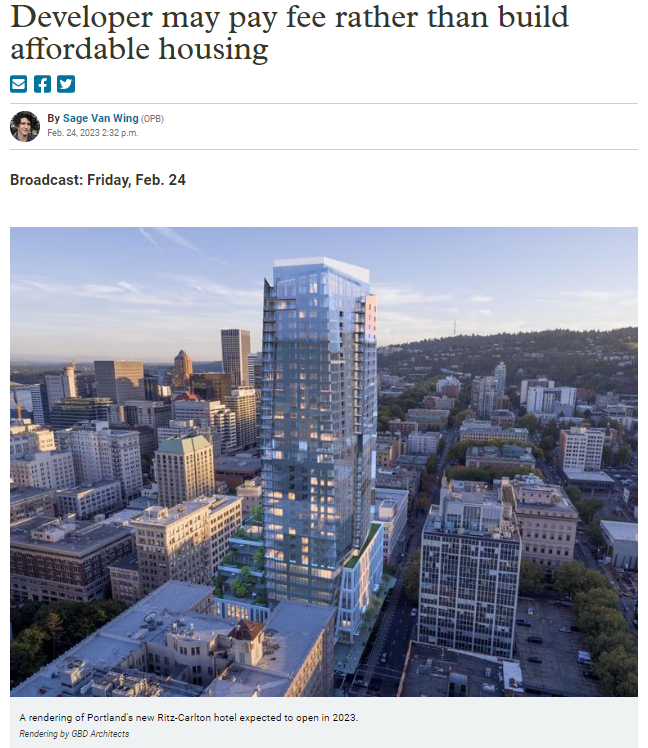
“Starting in 2017, all new apartment buildings built in Portland with more than 20 units must dedicate a portion of their units to low and moderate-income housing. But some developers are choosing to pay a penalty instead of creating affordable housing.”
“Some multifamily types are more inflation-resistant than others. This is particularly true with workforce housing—one of the more overlooked and underappreciated segments of the multifamily market. Due to its strong fundamentals and lack of existing housing supply, workforce housing is a worthwhile consideration as an investment, especially during volatile economic times.”